
Chapter 1
Girlfriend Refuses Second ER Visit After Boyfriend Demands "Princess Treatment" and Heavy Painkillers
Balancing personal professional responsibilities with a partner's health needs is a delicate act. While supporting a loved one through an illness is a fundamental part of any commitment, a fine line exists between genuine caregiving and being dragged into an unnecessary medical circus. For one woman, her boyfriend’s viral headache tested her absolute limits and transformed their home into an emotionally draining drama zone.
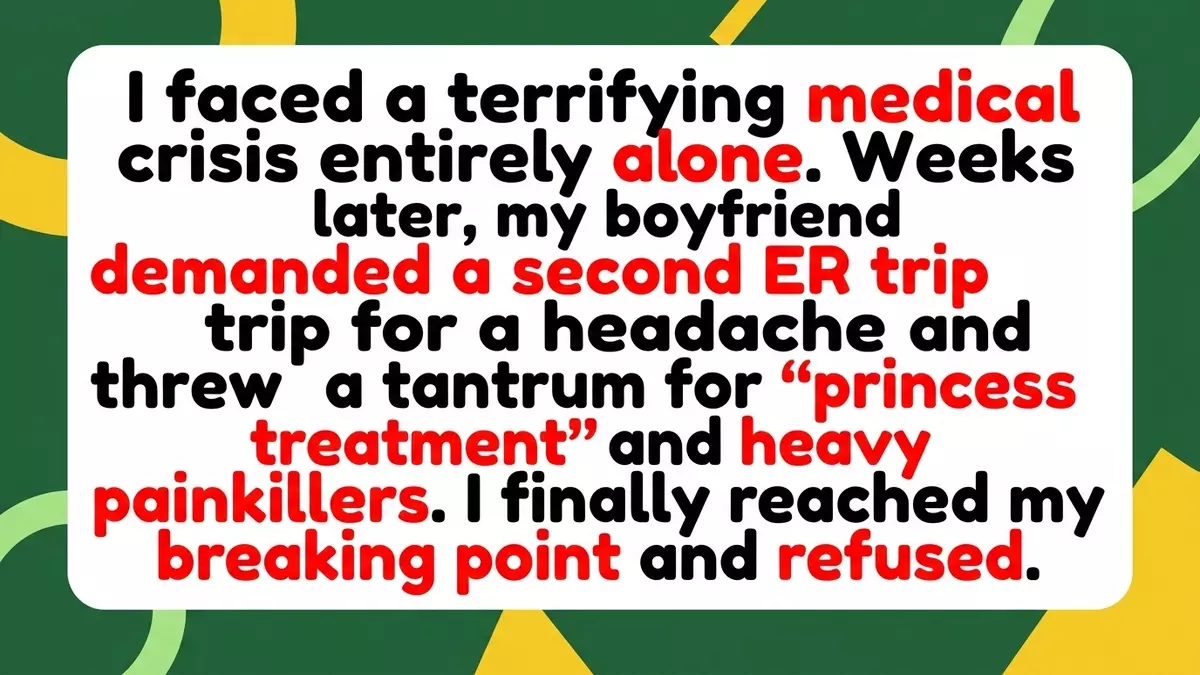
Juggling the immense stress of starting a brand-new job, she reached her breaking point when her boyfriend demanded a second trip to the emergency room in a single month. Coming just weeks after she had faced her own severe medical crisis entirely alone, his demands for doting attention and heavy narcotics left her questioning his maturity and the future of their entire relationship.
Girlfriend Refuses Second ER Visit After Boyfriend Demands Princess Treatment and Heavy Painkillers
The Reality of Relationship Scorekeeping
When one partner feels neglected during their own time of need, it often sets off a destructive pattern known as relationship scorekeeping. In this dynamic, individuals track past sacrifices and emotional debts like items in a ledger book. Relationship experts note that this type of emotional bean-counting is a clear signal of a lack of underlying trust.
In this case, the conflict exposed a profound sense of abandonment. The girlfriend could not help but contrast her own independent handling of a terrifying bout of internal bleeding with her boyfriend’s loud, demanding behavior over a viral headache. Because she felt emotionally neglected during her own medical emergency, his current helplessness and insistence on "princess treatment" felt deeply unfair and entirely one-sided.
The Passive-Aggressive Communication Cycle
A major layer of this relationship breakdown stems from a cycle of passive-aggressive communication. During her own previous emergency, the writer explicitly told her boyfriend that "it's okay" for him to stay at work. However, she secretly harbored deep resentment when he took her at her word.
-
The Unspoken Debt: By hiding her true expectations, she created an emotional debt that her boyfriend did not realize he owed.
-
The Empathy Block: This buried resentment ultimately overrode her ability to feel empathy when he later fell ill.
-
The Rejected Compromise: When she suggested a reasonable compromise—asking his sister to drive him to the hospital so she could rest for her new job—the boyfriend threw a tantrum, proving that the conflict was less about physical pain and more about a deeper power dynamic.