
Chapter 3
Validate Bodily Autonomy Proactively: Allow the teenager to steer all decisions regarding their physical appearance moving forward. Whether they choose to wear specific clothing, style their remaining hair in a new way, or experiment with creative expressions, giving them absolute veto power restores their sense of body ownership.
Anchor the Child in a Supportive Chosen Family: Surround the youth with a robust network of peers, mentors, and local community groups who celebrate them exactly as they are. Building a strong "chosen family" dilutes the sting of biological rejection, reminding the teen that their worth is independent of their grandmother's approval.
Conclusion: Autonomy Outweighs Outdated Image
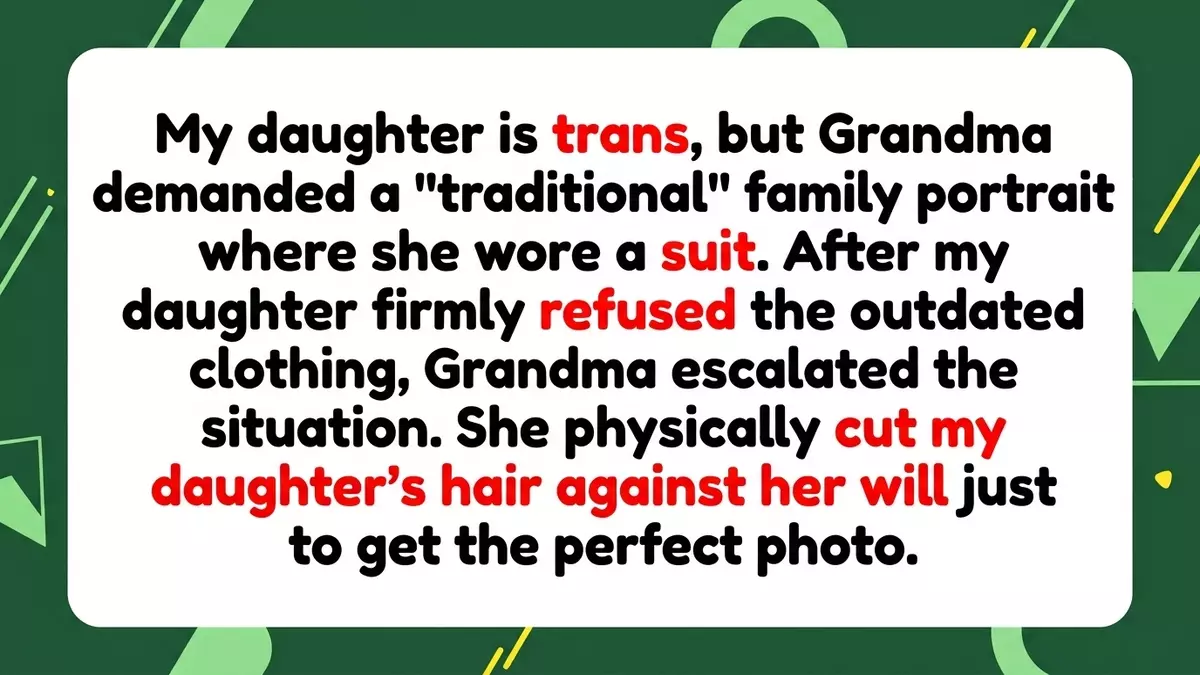
Ultimately, a family tradition is entirely meaningless if it requires the physical violation and emotional suffering of a child to exist. True family legacy is built on a foundation of mutual safety, unwavering support, and deep respect for individual truth—not a curated, superficial photograph designed to project a false reality to the neighbors. By drawing a permanent boundary against this severe violation, this mother and daughter have affirmed a vital human principle: a child's right to bodily autonomy and personal peace will always outweigh an elder's demand for forced compliance.
Frequently Asked Questions (FAQ)
Can cutting a child's hair without permission lead to legal charges?
Yes. In many jurisdictions, cutting another person's hair without their explicit, informed consent shifts the situation from a verbal argument into the realm of criminal battery or physical assault. Because it involves an unauthorized, non-consensual touching and alteration of a person's physical body, it can be formally investigated by law enforcement and prosecuted in a court of law.
Why is hair so deeply tied to identity during a gender transition?
For many transgender individuals, hair is one of the most visible, accessible, and powerful tools used to align their external appearance with their internal sense of self. It plays a major role in easing gender dysphoria and building social confidence. Violating that physical feature is frequently experienced as a direct, violent attempt to strip away their identity and force them back into a misaligned role.
How should a parent handle extended family members who refuse to use correct pronouns?
Parents should establish a clear, non-negotiable boundary. State the child's correct name and pronouns neutrally and firmly. If a relative continuously chooses to disregard these parameters out of malice or stubbornness, the parent must limit or completely suspend contact between that relative and the child to protect the youth from chronic emotional invalidation.