
Chapter 4
Conclusion: Protecting Personal Peace Over Unjust Demands
Adult friendships are vital components of a healthy, fulfilling life, but they should never require you to sacrifice your own financial security or emotional well-being to satisfy an irrational demand.
While it is entirely natural to feel a pang of sympathy for friends facing a stressful change in financial circumstances, expecting you to forfeit your hard-earned vacation out of hollow solidarity crosses a clear boundaries.
At the end of the day, protecting your personal peace is an act of self-preservation. Proceeding with your trip is not an act of malice; it is a rational, healthy decision to honor your financial investments and claim the mental rest you rightfully earned.
Frequently Asked Questions (FAQs)
1. Is it ethically wrong to go on a group trip alone if my friends lose their money?
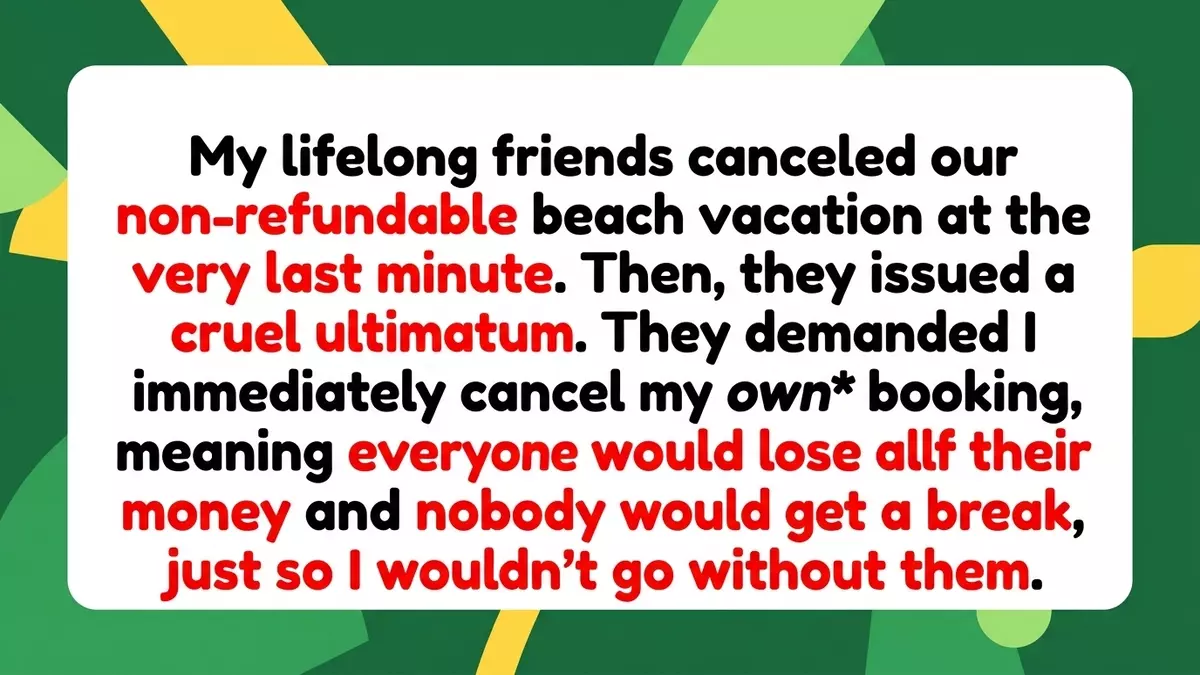
No. Because the booking was completely non-refundable, your decision to go or stay home has zero impact on their financial outcome—their money is gone either way. Forfeiting your own vacation out of guilt would create an unnecessary double loss where everyone loses their money and nobody gets a break.
2. Who is legally and socially responsible for a spot if someone backs out of a trip?
Both socially and legally, once an individual commits to a group travel reservation and pays their initial deposit, they assume full responsibility for that financial risk. If they choose to back out later, the financial burden of finding a replacement or absorbing the loss rests entirely on the person who canceled, never on the remaining travelers.
3. How can we prevent this type of financial drama when planning future group trips?
The best way to protect your relationships is to establish crystal-clear boundaries before booking. Always agree in writing that all deposits are strictly non-refundable to the individual if they choose to withdraw. Additionally, make purchasing comprehensive travel insurance a mandatory prerequisite for everyone entering the group chat.
4. What should I do if my friends stop talking to me because I kept the reservation?
If close friends choose to end a relationship because you refused to accommodate an irrational, lose-lose demand, it is a sign of deeper underlying issues with control and accountability within the friendship. True friends will naturally feel disappointed about missing a trip, but they will never deliberately sabotage your peace to make themselves feel better about their own misfortunes.
5. Does travel insurance cover a cancellation if a friend simply changes their mind?
Standard travel insurance policies only provide coverage for specific, documented emergencies—such as an unexpected medical illness, a death in the immediate family, or severe weather disruption. If a traveler decides to pull out because of basic financial anxiety or a change of mind, standard insurance will not provide a refund. To protect against those situations, individuals must invest in a premium "Cancel For Any Reason" (CFAR) insurance policy.